

TD Reading comprehension

TEXT 1 – John Mbiti (African Religions and Philosophy)
"I am because we are, and since we are, therefore I am. The African conception of personhood is rooted in the community. A person becomes a person through other persons. No one is born fully human: we become human through our relationships, through our participation in the shared life of the community. The greatest crime, then, is to live only for oneself, to neglect one’s people, for such a man is less than human. To be human is to affirm the humanity of others and to build together the bonds that sustain life."
Questions
1- What, according to the author, is the African conception of personhood?
2- How does a person become “fully human”?
3- What is considered the greatest crime in this context?
4- What does it mean “to affirm the humanity of others”?
5- Find words from the passage which mean: rooted; participation; crime; sustain.
Exercise: Translate the text into French.
TEXT 2 – W.E.B. Du Bois (The Souls of Black Folk)
"One ever feels his two-ness,—an American, a Negro; two souls, two thoughts, two unreconciled strivings; two warring ideals in one dark body. The history of the Negro is the history of this strife—this longing to attain self-conscious manhood, to merge his double self into a better and truer self. In this merging he wishes neither of the older selves to be lost. He would not Africanize America… He would not bleach his Negro soul in a flood of white Americanism, for he knows that Negro blood has a message for the world."
Questions
1- What does Du Bois mean by “two-ness”?
2- What is the “strife” that marks the history of the Negro?
3- Why does Du Bois refuse to “bleach his Negro soul”?
4- What is the ultimate wish of the Negro in America?
5- Find words which mean: longing; reconcile; cursed; opportunity.
Exercise: Translate the text into French.
TEXT 3 – Chinua Achebe (Things Fall Apart)
"The white man is very clever. He came quietly and peaceably with his religion. We were amused at his foolishness and allowed him to stay. Now he has won our brothers, and our clan no longer acts like one. He has put a knife on the things that held us together, and we have fallen apart."
Questions
1- What is the “cleverness” of the white man according to the narrator?
2- How did the people first react to the new religion?
3- What has been the result of the white man’s presence?
4- Explain the meaning of “He has put a knife on the things that held us together.”
5- Find words from the text meaning: peaceably; amused; clan; fallen apart.
Exercise: Translate the text into French.
TEXT 4 – Ngũgĩ wa Thiong’o (Decolonising the Mind)
"The language of African literature must be the language of the African people. To write in English or French is to continue the colonial alienation. Language carries culture, and culture carries, particularly through orature and literature, the entire body of values by which we perceive ourselves and our place in the world. To starve or kill a people’s language is to starve or kill their memory and consciousness."
Questions
1- What does the author say about the language of African literature?
2- Why is writing in English or French seen as alienation?
3- What is the role of language in culture?
4- What happens when a people’s language is killed?
5- Find words from the text meaning: alienation; values; memory; consciousness.
Exercise: Translate the text into French.
TEXT 5 – Maya Angelou (I Know Why the Caged Bird Sings)
"The caged bird sings with a fearful trill of things unknown but longed for still and his tune is heard on the distant hill for the caged bird sings of freedom."
Questions
1- What does the caged bird represent?
2- Why does the bird sing “with a fearful trill”?
3- What is the song of the bird really about?
4- Explain the meaning of “things unknown but longed for still.”
5- Find words from the text meaning: trill; distant; freedom.
Exercise: Translate the text into French.
TEXT 6 – Aimé Césaire (Notebook of a Return to the Native Land)
"My negritude is not a stone, its deafness hurled against the clamor of the day. My negritude is not a tower nor a cathedral. It plunges into the red flesh of the soil, it plunges into the blazing flesh of the sky. It breaks through the opaque prostration with its upright patience."
Questions
1- How does the author describe his negritude?
2- What does it mean that negritude is not “a stone” or “a tower”?
3- How is negritude linked to nature (soil and sky)?
4- What images of strength and patience can you find in the text?
5- Find words from the text meaning: clamor; blazing; opaque; patience.
Exercise: Translate the text into French.
TEXT 7 – Leopold Sédar Senghor (Poems)
"I sing of night and day, of Africa and Europe joined in my blood. I sing of my heart that beats in two rhythms, one dark and the other light. When they meet, they make a single harmony, the human song of tomorrow."
Questions
1- What does the poet mean by “Africa and Europe joined in my blood”?
2- What is symbolized by “two rhythms, one dark and the other light”?
3- How does the poet see the meeting of these two rhythms?
4- What is “the human song of tomorrow”?
5- Find words from the text meaning: rhythms; harmony; joined.
Exercise: Translate the text into French.
TEXT 8 – Nelson Mandela (Long Walk to Freedom)
"I have walked that long road to freedom. I have tried not to falter; I have made missteps along the way. But I have discovered the secret that after climbing a great hill, one only finds that there are many more hills to climb. I have taken a moment here to rest, to steal a view of the glorious vista that surrounds me, to look back on the distance I have come. But I can only rest for a moment, for with freedom comes responsibilities, and I dare not linger, for my long walk is not ended."
Questions
1- What is the “long road” the author speaks about?
2- What does Mandela mean by “after climbing a great hill, one only finds many more hills to climb”?
3- Why can the author “rest for a moment” but not linger?
4- What does freedom bring according to Mandela?
5- Find words from the text meaning: falter; vista; linger; glorious.
Exercise: Translate the text into French.
TEXT 9 – Olaudah Equiano (The Interesting Narrative)
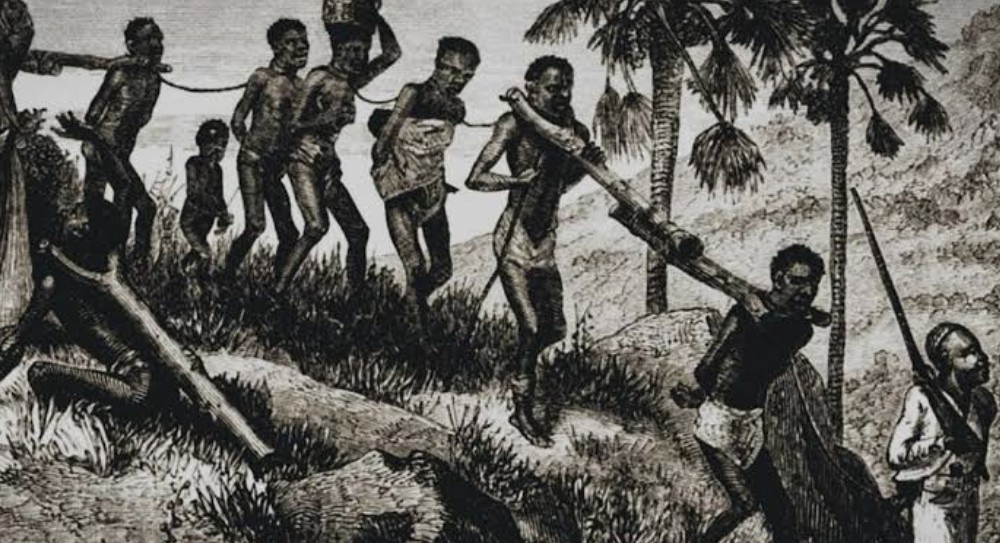
"Indeed such were the horrors of my views and fears at the moment, that, if ten thousand worlds had been my own, I would have freely parted with them all to have exchanged my condition with that of the meanest slave in my own country. I expected every moment, when I looked around, to meet death; and if my fears had permitted me, I should have jumped over the side and ended my life at once."
Questions
1- What situation is the narrator describing?
2- Why would he exchange his condition even with “the meanest slave” in his country?
3- What does this passage reveal about the horrors of slavery?
4- What extreme solution did the author consider?
5- Find words from the text meaning: horrors; exchanged; meanest; ended.
Exercise: Translate the text into French.
TEXT 10 – Kwame Nkrumah (Africa Must Unite)
"The independence of Ghana is meaningless unless it is linked up with the total liberation of Africa. Our independence is not an end in itself, but the beginning of a greater African freedom. The forces that unite us are intrinsic and greater than the superimposed influences that keep us apart. The African unity we seek is a political kingdom which can only be gained by the sovereign will of the African people."
Questions
1- What does Nkrumah say about Ghana’s independence?
2- Why is independence considered “the beginning” rather than an end?
3- What are the “forces that unite us”?
4- What is meant by “a political kingdom” of African unity?
5- Find words from the text meaning: meaningless; liberation; intrinsic; sovereign.
Exercise : Translate the text in French.



Commentaires (0)
Laisser un commentaire