

“Cameroon Opposition Figure Anicet Ekane Buried Amid Political Tensions
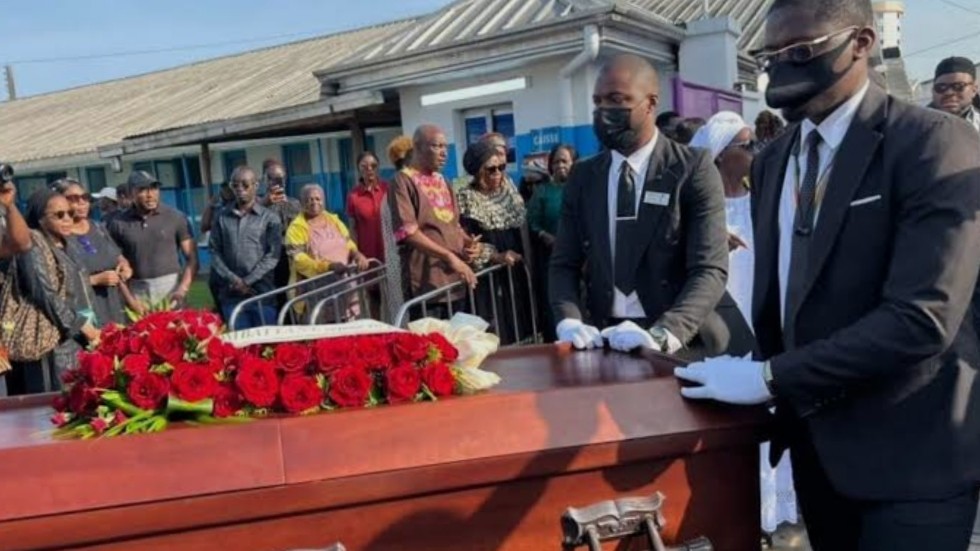
The opposition figure Anicet Ekane was laid to rest on May 9 in Bomono. The ceremony was marked by tensions between his family and his former political party, subtly fueled by the authorities.
Published on May 12, 2026 by Jeune Afrique
It was in Bomono, a small Sawa village located a few kilometers north of Douala, that the final days of the funeral ceremonies for Cameroonian opposition leader Anicet Ekane took place. The leader of the African Movement for New Independence and Democracy (Manidem), who died on December 1 while detained at the Secretariat of State for Defense (SED) in Yaoundé, was buried in strict family privacy on the afternoon of Saturday, May 9.
The final stage of a two-day mourning period had begun the previous evening with a vigil at his home. Anicet Ekane was buried according to Mpongo customary traditions. Several political figures attended, including Joshua Osih of the Social Democratic Front (SDF), and Alice Nkom, spokesperson for Issa Tchiroma Bakary, alongside journalist Henriette Ekwe and entrepreneur Rebecca Enonchong.
Divisions Encouraged by the Authorities
However, the funeral drew fewer attendees than expected. This situation had little to do with the popularity of the deceased. Rather, it stemmed from a dispute between part of his immediate family and members of his political party, Manidem, sparking heated debate within public opinion. At the heart of the tensions was the participation of representatives of the government, which had considered Ekane one of its main adversaries.
One question emerged in the background: did the Cameroonian authorities attempt to control the ceremonies by instrumentalizing the deceased’s sons? For Valentin Dongmo, the new leader of Manidem, the answer is unequivocal. “Ekane’s executioners wanted at all costs to prevent a tribute worthy of the hero he was,” he explained. “Unfortunately for them, they cannot bury his years of struggle or his legacy.”
Indeed, during the transfer of the body, the Minister of Territorial Administration, Paul Atanga Nji, had already made headlines by dispatching the governor of the Littoral region, Samuel Dieudonné Ivaha Diboua, to Douala airport. A clear message was reportedly delivered: “Ekane will be buried like an ordinary citizen.” In response, and following contacts made weeks later between an envoy from Yaoundé and the deceased’s sister, Mariane Simon-Ekane, Manidem reacted sharply.
In a statement issued in mid-March, the party reiterated that “no place [would] be reserved for the government” during the opponent’s funeral ceremonies. Following this position, part of the family challenged in court the legitimacy of Manidem’s role in organizing the funeral. Before the judges, party officials presented recordings in which Ekane had expressed his final wishes, asking that “the management of [his] mourning be entrusted to the party,” while his family would play “a secondary role.”
Yaoundé Seeks to Close the Ekane Chapter
The Mpongo traditional chiefs, themselves under the authority of the Ministry of Territorial Administration, reportedly pressured the family to seek control over the ceremonies. The controversy expanded into the public sphere when senior regime figures such as RDPC deputy secretary-general Grégoire Owona and PADEC president Jean de Dieu Momo — both silent during Ekane’s detention after the October 2025 presidential election — asserted their right to attend the funeral.
The Douala-Bonanjo Court of First Instance ultimately ruled that the funeral would be organized by one of the deceased’s three sons, while also deciding that the body should not be handed over to Ekane’s widow.
Muna Ekane, the designated son, then sought to ease tensions by inviting all Cameroonians to pay tribute to a steadfast defender of democracy. Deprived of the leading role it claimed in organizing the funeral, Manidem nevertheless chose not to participate, calling on its allies, including the Movement for the Renaissance of Cameroon (MRC) led by Maurice Kamto, to do the same. Officials from the ruling Cameroon People’s Democratic Movement (RDPC) also ultimately decided not to attend.
Determined to move on from a contested presidential election, the authorities in Yaoundé appear to have achieved a двойной objective: first, preventing Ekane’s political allies — supporters of a more radical opposition — from turning the event into a political platform; and second, avoiding renewed public demands for the truth surrounding the opposition leader’s death.
Anicet Ekane died in pretrial detention after reportedly being deprived of his oxygen extractor, while the official investigation concluded that he died of “natural causes” — a conclusion his entourage continues to reject.





Commentaires (0)
Laisser un commentaire