

South Africa’s Constitutional Democracy Faces a Defining Test
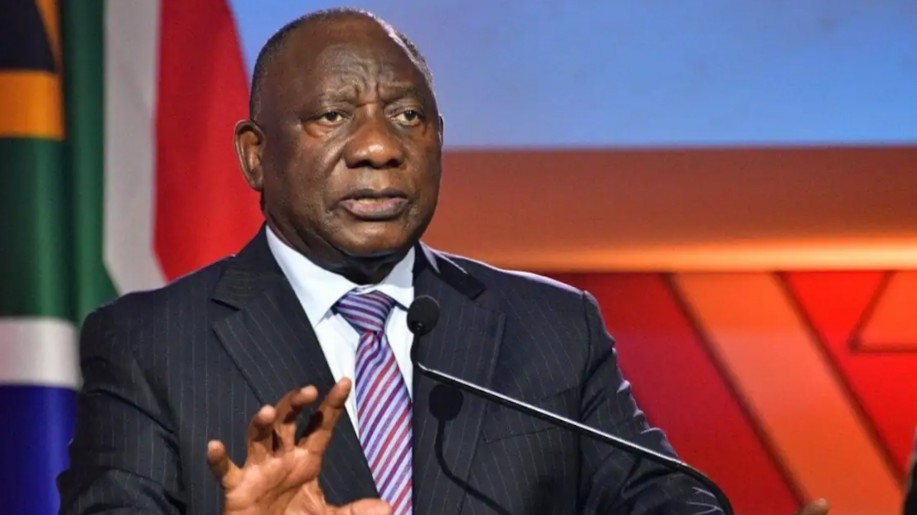
Beyond the scandal of dollars hidden inside a couch on a presidential farm, it is now the credibility of South Africa’s institutions themselves that stands at the center of a growing political storm. The Constitutional Court’s ruling that Parliament violated the Constitution when it blocked impeachment proceedings against President Cyril Ramaphosa in 2022 has opened a political sequence with potentially historic consequences for South African democracy.
In a country where corruption scandals have steadily eroded public trust since the era of Jacob Zuma, the judgment from the nation’s highest court sounds like a sharp reminder: no parliamentary majority can override the spirit of the Constitution.
The leader of the Economic Freedom Fighters, Julius Malema, immediately seized the moment. Speaking to journalists in Johannesburg, Malema called on Ramaphosa to resign, arguing that a president facing possible impeachment proceedings could not simultaneously govern the country while preparing his political defense.
For years, Malema has sought to turn the so-called “Farmgate” scandal into a symbol of a presidency increasingly disconnected from the moral standards it claims to uphold. The controversy dates back to the 2020 burglary at Ramaphosa’s Phala Phala farm in Limpopo Province. According to allegations that later triggered the scandal, approximately $580,000 in cash had been hidden inside a couch before being stolen.
The core issue is not merely the burglary itself. What has shocked much of South African public opinion is the unresolved political question surrounding why such a large amount of foreign currency was allegedly being kept in a private residence, despite South African regulations requiring foreign currency to be deposited with authorized financial institutions within a limited timeframe.
The president has consistently denied wrongdoing. He maintains that the money came from the legal sale of buffaloes to a foreign buyer and insists that he fully cooperated with all investigations. Following the ruling, his office reaffirmed its “commitment to the Constitution, judicial independence, and the rule of law.”
Yet the matter now extends far beyond Ramaphosa himself. The Constitutional Court’s decision directly challenges the functioning of South Africa’s Parliament and the political culture of the African National Congress. For years, the ANC relied on its parliamentary majority to shield its leaders from the most dangerous political consequences. But the 2024 general elections fundamentally altered the political landscape: Nelson Mandela’s historic party no longer governs alone and now depends on a fragile coalition.
That new balance of power transforms the case into a decisive test for post-apartheid South African democracy. Coalition partners, particularly the Democratic Alliance, are attempting to present themselves as defenders of institutions rather than merely tactical allies of the government. Geordin Hill-Lewis, a prominent DA figure, stressed that the parliamentary committee must now do its work “properly, rationally, fairly and in accordance with the Constitution.”
In reality, beneath the legal language lies a deeper struggle over the moral legitimacy of the South African state at a time of mass unemployment, chronic energy shortages, and extreme inequality. A growing share of the population no longer sees “Farmgate” as an isolated incident, but as evidence of a political elite increasingly detached from the daily hardships facing ordinary citizens.
The political irony is striking. Ramaphosa rose to power promising to restore public ethics after the Zuma years, which were overshadowed by allegations of “state capture.” Today, he himself must convince South Africans that he still embodies that promise of moral renewal.
For Malema and the EFF, the affair represents a major political opportunity. By portraying themselves as uncompromising defenders of the Constitution against parliamentary maneuvering, they hope to channel social anger and strengthen their appeal among younger Black South Africans who have grown increasingly disillusioned with the political establishment.
But the case also exposes contradictions within the radical opposition itself. Malema is currently appealing a conviction related to the illegal possession and discharge of a firearm. In this atmosphere of generalized distrust toward political elites, every camp accuses the other of weaponizing institutions for political gain.
The central question therefore remains unresolved: is South Africa’s democracy still capable of enforcing constitutional principles independently of partisan power struggles. The answer will determine far more than the political future of Cyril Ramaphosa. It will reveal whether South Africa remains one of the few states on the continent where institutions can still impose genuine limits on executive power — or whether partisan protection will ultimately prevail over the constitutional ideal born in 1994.





Commentaires (0)
Laisser un commentaire