

Africa and the Challenge of Self-Financing: Without a Revolutionary Break, the Awakening Will Remain Incomplete
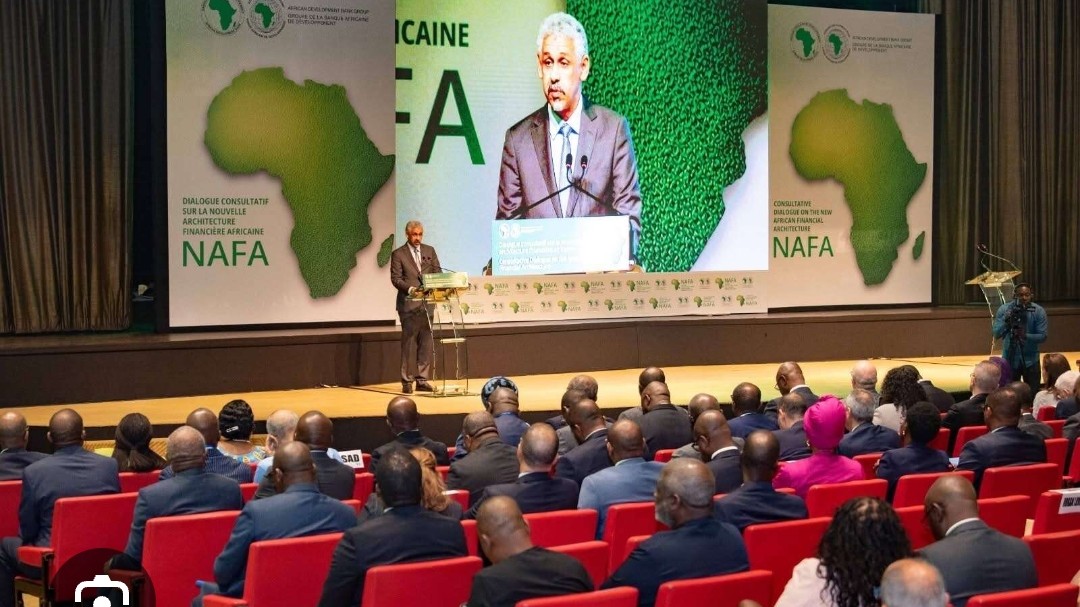
Africa finally seems to be understanding a fundamental historical truth: no people can build genuine sovereignty while depending permanently on foreign aid. The recent determination shown by several African states to regain control over their financing, natural resources, and debt is therefore an important step forward. The “Abidjan Consensus,” supported by the African Development Bank, reflects a healthy awakening: the continent must mobilize its own resources instead of endlessly waiting for solutions from the West.
However, as promising as this direction may appear, it cannot produce real results without major political and ideological preconditions. Africa lacks neither resources, nor capital, nor a working population. What it mainly lacks is a revolutionary leadership capable of breaking with the reflexes inherited from colonization.
Since independence, a large part of the African elite has governed within a logic of dependence. Many leaders have been more concerned with reassuring former colonial powers than with transforming their own economies. Remaining in power often took priority over economic sovereignty. To survive politically, governments sought diplomatic, military, or financial support from Western capitals. This logic produced states that became politically independent but economically subordinate.
For decades, African summits too often resembled meetings aimed at persuading foreign donors to finance the continent’s development. Yet Africa already possessed the resources necessary to begin its own industrialization. The continent is rich in minerals, energy, agriculture, and human potential. But instead of building productive economies capable of locally transforming these resources, many governments preferred rent-based systems, foreign debt, and dependence on international aid.
The example of NEPAD perfectly illustrates this contradiction. When the New Partnership for Africa’s Development was launched in the early 2000s, several African leaders presented it as a new strategy for the continent’s development. In reality, however, the model depended heavily on financing from “development partners,” meaning foreign powers and international financial institutions. Africa was still thinking about its future through the eyes and money of others. When the expected partners failed to provide the anticipated support, the project gradually lost momentum. This structural dependence exposed one of the major weaknesses of African policies: thinking about development through external aid rather than through the continent’s internal capacities.
Even today, some leaders multiply sovereignist speeches without implementing the profound transformations required. Announcing measures is not enough. African populations no longer need slogans; they need concrete action. It is not enough to declare that raw materials should be processed locally; factories must be built, engineers trained, electricity secured, and emerging industries protected. It is not enough to denounce multinational corporations; governments must impose balanced contracts and genuinely fight corruption, which continues to drain public wealth.
The question of leadership is therefore central. Africa needs leaders capable of making difficult choices, even when those choices displease foreign interests. Revolutionary leadership does not necessarily mean authoritarian rule; it means leadership capable of placing the continent’s strategic interests above dependency and personal political survival.
But leadership alone will not be enough without another essential condition: African unity. No African country, taken individually, can sustainably negotiate on equal terms with the world’s major economic powers. European, American, and Chinese markets possess enormous financial and technological power. In comparison, Africa’s fragmentation remains one of its greatest weaknesses.
World history nevertheless shows that collective strategy can transform power relations. In the 1970s, oil prices did not rise dramatically because a single producer decided so. They increased because members of the Organization of the Petroleum Exporting Countries (OPEC) adopted a common position and remained firm in the face of Western powers. By collectively controlling their production and exports, they succeeded in imposing their interests on the global economic system. This experience proves that no strategic resource can become a source of power without collective discipline and political solidarity.
Today, Africa possesses several equally strategic resources: cobalt, lithium, uranium, manganese, bauxite, gas, and vast agricultural potential. Yet these riches still benefit foreign industries more than African populations themselves. As long as each country negotiates separately, multinational corporations will continue to exploit competition between African states in order to secure favorable contracts.
The idea of African financial sovereignty can therefore only become reality through a genuine intellectual and political revolution. The continent must stop seeing itself as a poor space waiting for external rescue. It must learn to consider its resources, its internal market, and its youth as the foundations of a future power.
The reduction of Western aid, often presented as a threat, could ultimately become a historic opportunity. It forces Africa to abandon the illusion of comfortable dependence. Great powers primarily defend their own interests; Africa must now learn to defend its own with the same determination.
The real turning point will not come only from new financial mechanisms or institutions. It will come above all from the emergence of a generation of leaders capable of breaking with the neocolonial legacy, thinking in terms of collective autonomy, and transforming Africa’s immense wealth into real economic power.





Commentaires (0)
Laisser un commentaire